

KITE | Product Team Iteration Retrospective
Prompt
Use VIFE Lite to create a 4-page, 16:9, editable English retrospective of a fictional product team's iteration: a KITE cover; three outcomes (clearer requirements, a unified experience, less handoff friction); a Keep / Improve / Try three-column retrospective; and a closed-loop action flow of spot the problem → validate quickly → codify the standard. Use a modern collaborative-whiteboard look in electric blue, coral orange, off-white and deep ink, label every page "Fictional team example", and do not invent performance data.
Result
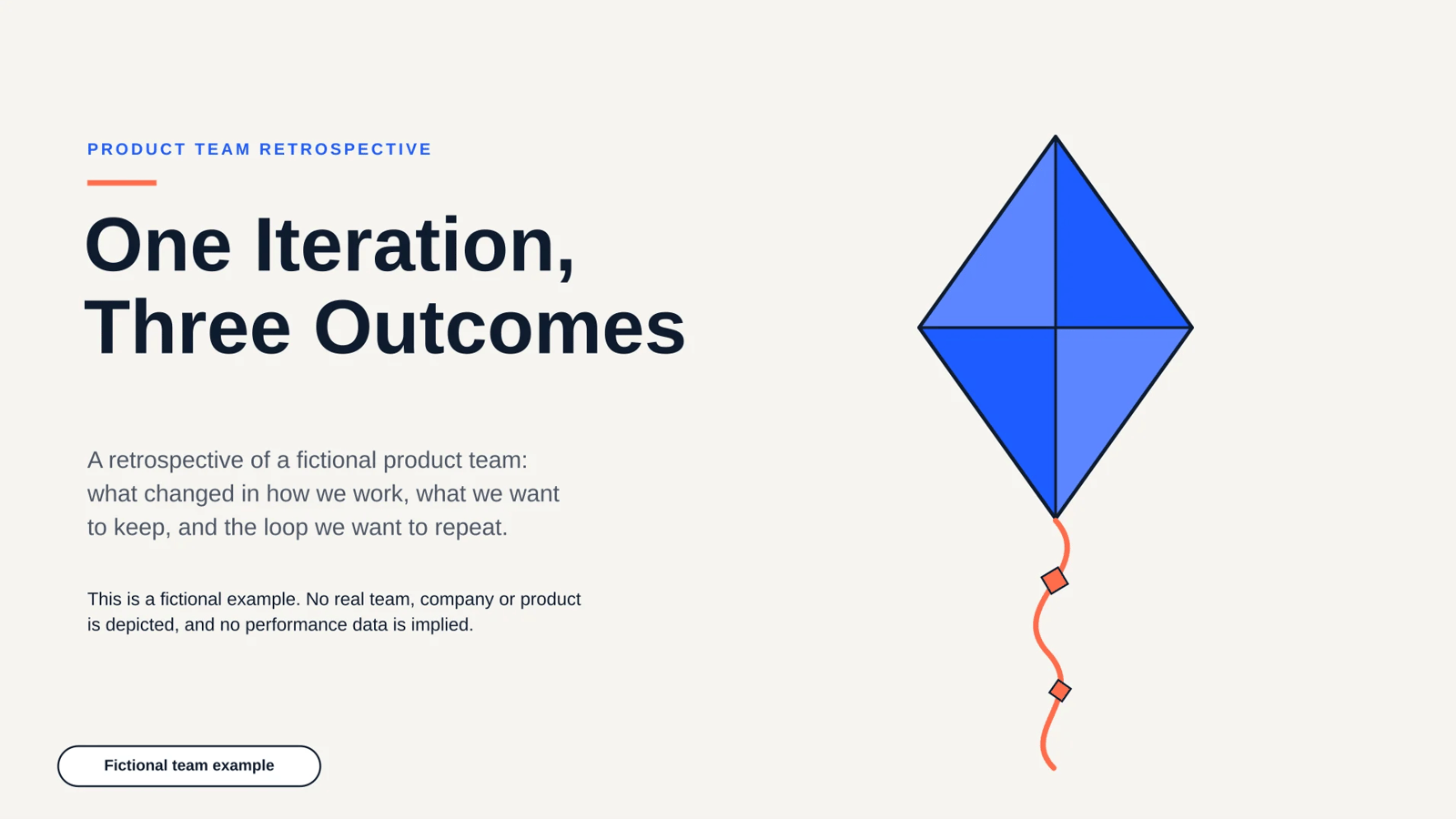
Here's the 4-page, 16:9 editable English retrospective — One Iteration, Three Outcomes.
What's in it
- Cover — a kite built from native editable vector panels (electric-blue diamond sails, ink cross-frame, coral tail) beside the title block.
- Three outcomes — three equal whiteboard cards: clearer requirements, one unified experience, less handoff friction, each with a simple native icon and a qualitative line on what changed in how the team works.
- Keep / Improve / Try — a true three-column retro with 12 tilted sticky notes (4 per column), each column marked in its own accent.
- Closed loop — Spot the problem → Validate quickly → Codify the standard, joined by arrow connectors with a coral return path that visibly closes the loop back to step one.
How it's built
- Palette: electric blue
#1E5BFF, coral orange#FF6B4A, off-white#F6F4EF, deep ink#0E1B2E; Inter in two weights, ink outlines on every card, no gradients or shadows — so it prints cleanly. - Every element is native text, shape, line or connector. Nothing is a flattened image; you can edit any word or move any piece.
- "Fictional team example" sits in a chip at the bottom of all four pages, and the cover also states it in words.
- No performance data anywhere: there isn't a single digit in the deck — no metrics, percentages, durations, counts or dates — and no real company, product or person names.
One honest note: the deck's own inspection only returned partial rendered page views (a payload cap), so the visual check combined those rendered fragments, node geometry and the deterministic validator — which passed with zero issues and zero warnings. If you want, I can walk through any page and adjust spacing or copy.
Deck id for later edits: 2e57caca-f6c1-5beb-8f0a-bfe3e5508708.
How it was made
- Mode
- Slides
Related presentation prompts

MIRA — A Quiet Pause | Fragrance Brand Launch
Presentation
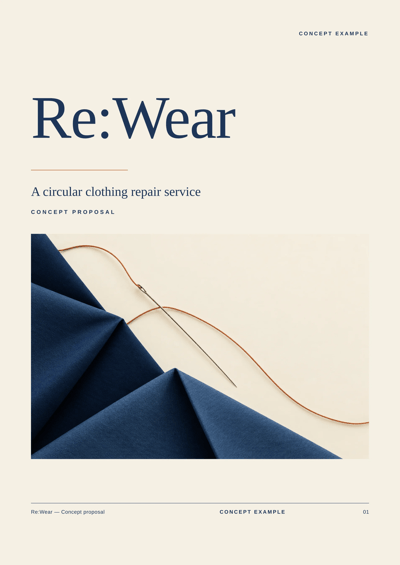
Re:Wear | Circular Clothing Repair Service Proposal
Presentation
From One Goal to Deliverables | Introducing VIFE
Presentation
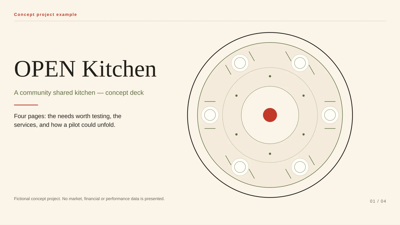
OPEN Kitchen | Community Shared Kitchen Concept Proposal
Presentation
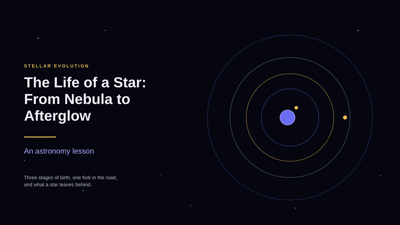
The Life of a Star | From Nebula to Afterglow
Presentation
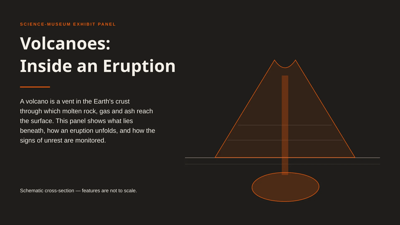
Volcanoes | Earth's Breathing Windows
Presentation
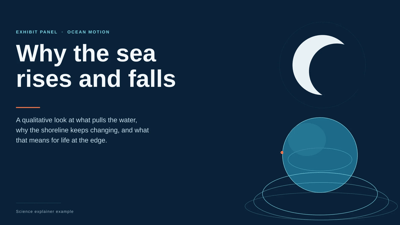
Tides: The Ocean Keeps Its Own Beat | Science Lesson Deck
Presentation
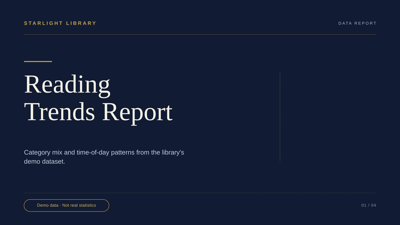
Starlight Library | Reading Trend Insights
Presentation