

Podcast from an article
Turn an article or PDF into a 5-minute two-host episode with music, chapters and show notes.
- Audio
- Education
- By the Vife team
Example result
Podcast from an article
Podcast from an article
What you need
- Article URLLink · Optional
- Article PDFFile · Optional
The prompt
Turn article URL, or see attached PDF into a two-host podcast episode of about 5 minutes. Two distinct AI hosts, a curious one and an expert, discuss the article's key points in natural, conversational turns, with every fact taken from the article. Add a short intro and outro music sting, chapters, show notes that list the source and say the voices are AI-generated, and a transcript. Mix to podcast loudness. Deliver the MP3, the show notes and the transcript.
The outlined blanks are yours to fill in when you use the template.
Made with this template
Related templates
- Audio
“Step out your front door, and give yourself ten minutes. No destination. Just walk. Notice where the sidewalk dips for a wheelchair — and where it doesn't. Look up: is there shade…”
Speech · fable
Ad voiceover
Record your ad script as a timed 30-second voiceover in the voice style you choose.
Audio
- Audio
Sleep story
Sleep story
A 10-minute calm, narrated sleep story with a soft ambient music bed.
Audio
- Audio
Audiobook chapter
Audiobook chapter
Narrate a chapter in one warm voice with natural pacing, per-paragraph files and captions.
Audio
- Audio
Audio stings pack
Audio stings pack
Four short original stings for your show or channel: intro, transition riser, tension hit and outro.
Audio
Lesson deck
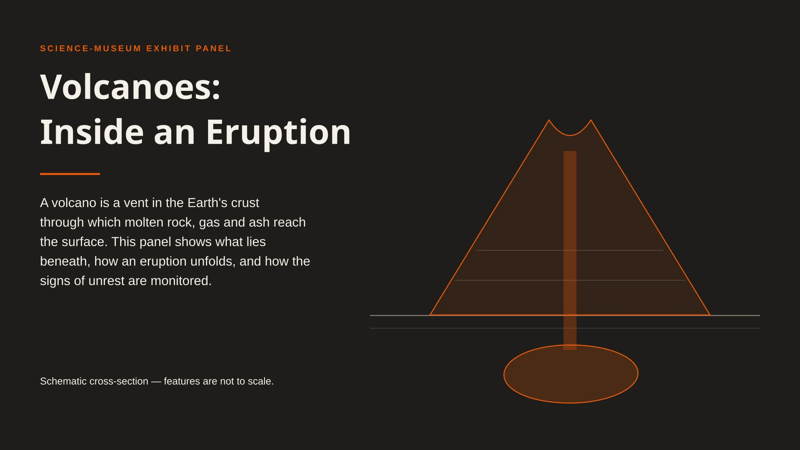
A 10-slide lesson for any topic and grade, with an activity and a check-for-understanding question.
Presentation
- docxThe Reading Corner on Alder Row — Observational Research Report (sample content)
FIELD STUDY 03 · OBSERVATIONAL RESEARCH REPORT
The Reading Corner on Alder Row
How a small, volunteer-run reading space is used, shared and valued across seven days — and what the next round of observation should measure.
1 Purpose and setting
The Alder Row Community Centre sets aside an 18 m² corner of its main hall as a free reading space: one armchair, two benches, a low table, a rug and about 420 donated books. It is open whenever the hall is open, 08:00–20:00, but staffed by a volunteer for only two hours a day.…
2 Research questions
RQ1 Use — Who comes to the corner, when, for how long, and what do they actually do there?
RQ2 Conditions — Which social and environmental conditions accompany sustained reading rather than brief browsing?
RQ3 Meaning — How do visitors themselves describe the corner's value, and where do quiet, sharing and space come into tension?
3 Hypotheses
Literature review
An annotated bibliography of 15 recent papers, grouped by theme, with agreements and open questions.
Research
- docxStudy guide
03 HIGH WATER AND LOW WATER
High water is the moment the sea reaches its highest level at a place; low water is its lowest. In between, the water ebbs (falls) or floods (rises). The difference in height between a high and the next low is the tidal range. The Moon returns overhead every 24 hours 50 minutes,…
04 SPRING TIDES AND NEAP TIDES
The words are not about the season — “spring” here means the water springs up, in any month of the year.
CONCEPT COMPARISON TABLE editable — rewrite any cell to match your own textbook or syllabus
Sample content for classroom practice — heights, times and examples are illustrative. Before any trip to the coast, check the local tide forecast and the safety notices for that beach or harbour.
Two observation exercises
Both use published tide predictions, so you can do them from a desk or a classroom — there is no need to stand near the water. Write in the spaces provided; the hints are below.
H ANSWER HINTS
▪ Timing. Successive high waters are about 12 hours 25 minutes apart, because the Moon returns overhead every 24 hours 50 minutes.
Study guide
Turn a chapter PDF into a study guide with key terms, a concept map and ten practice questions.
Document
Infographic
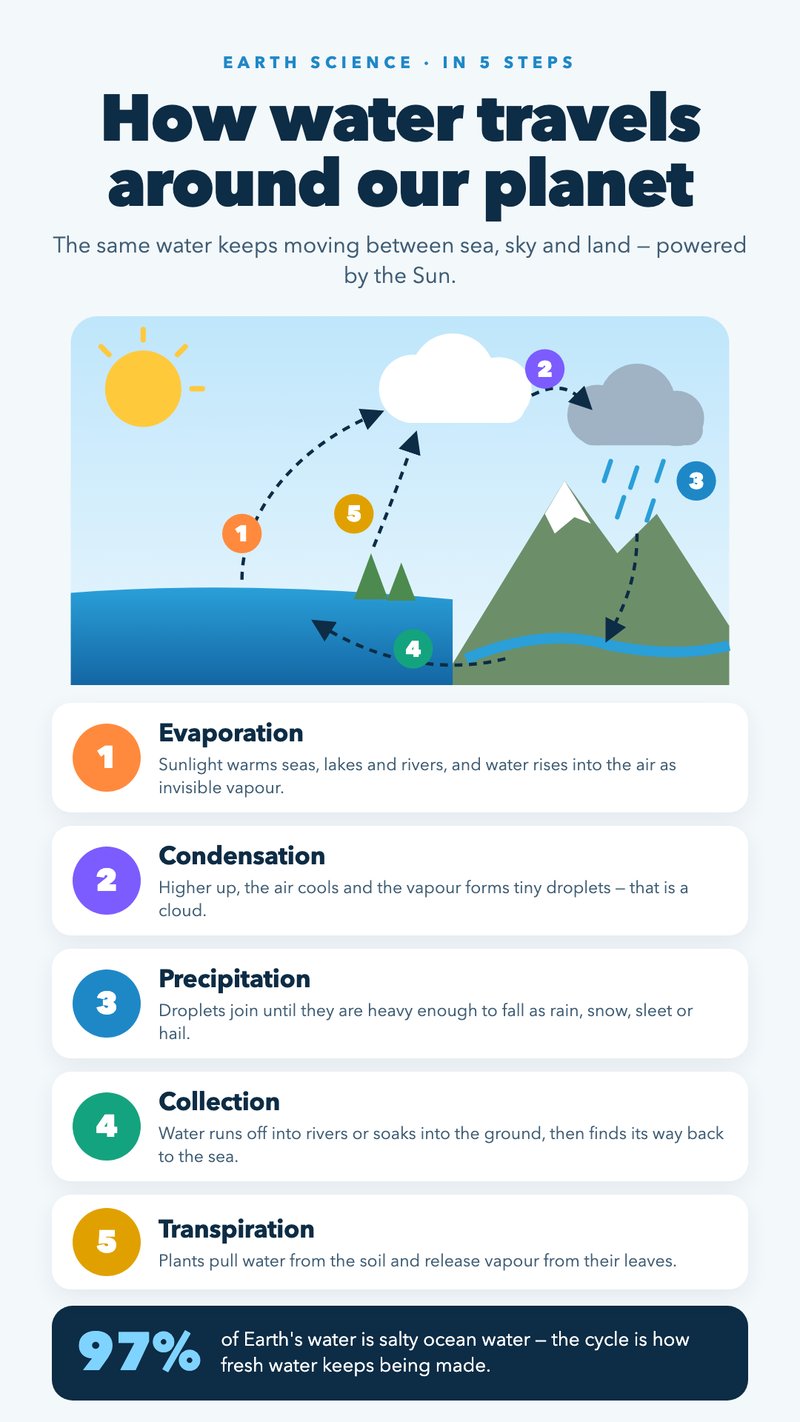
A tall 9:16 infographic that explains a topic or your data in five clear sections.
Image